Setting▾
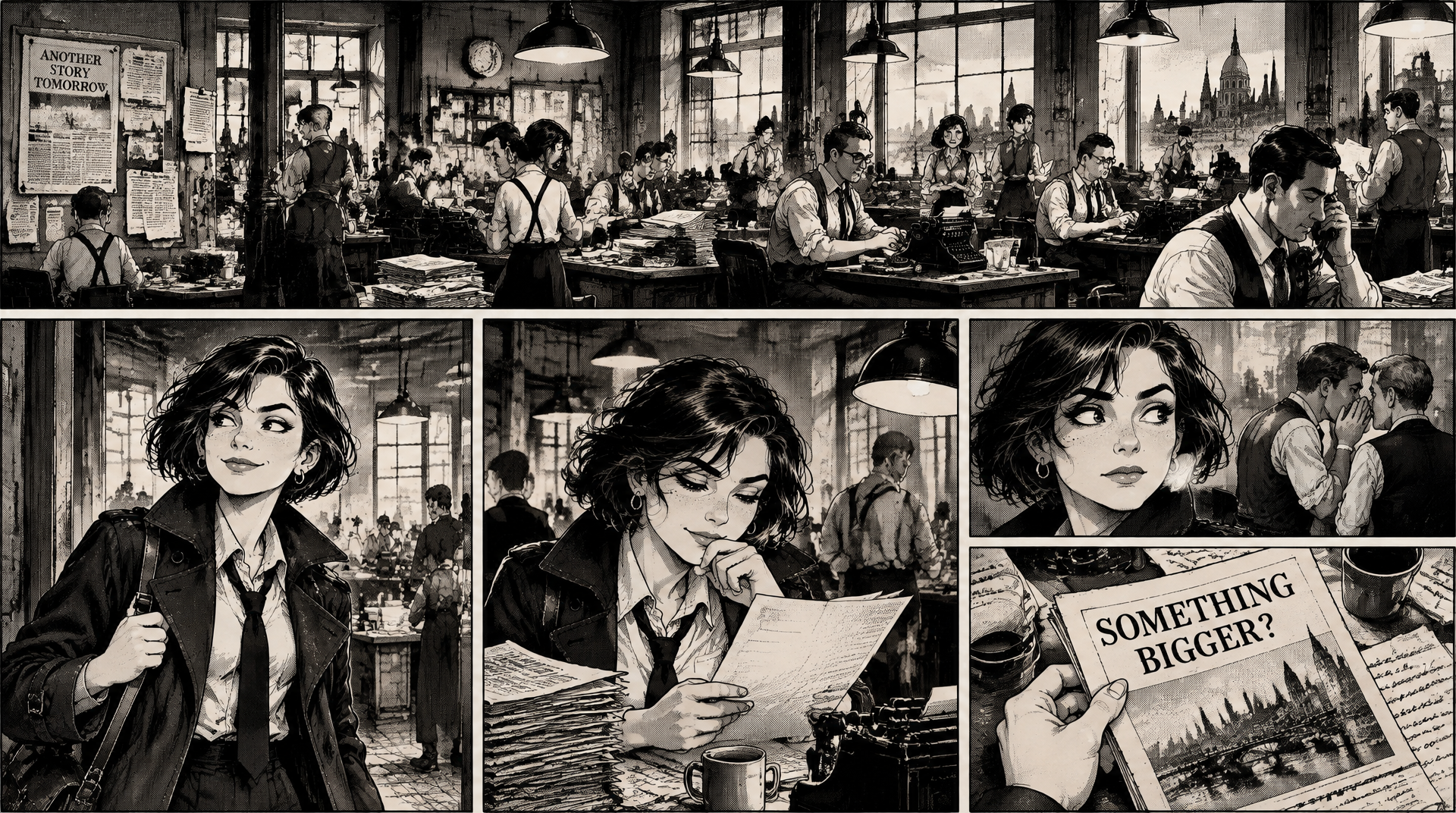
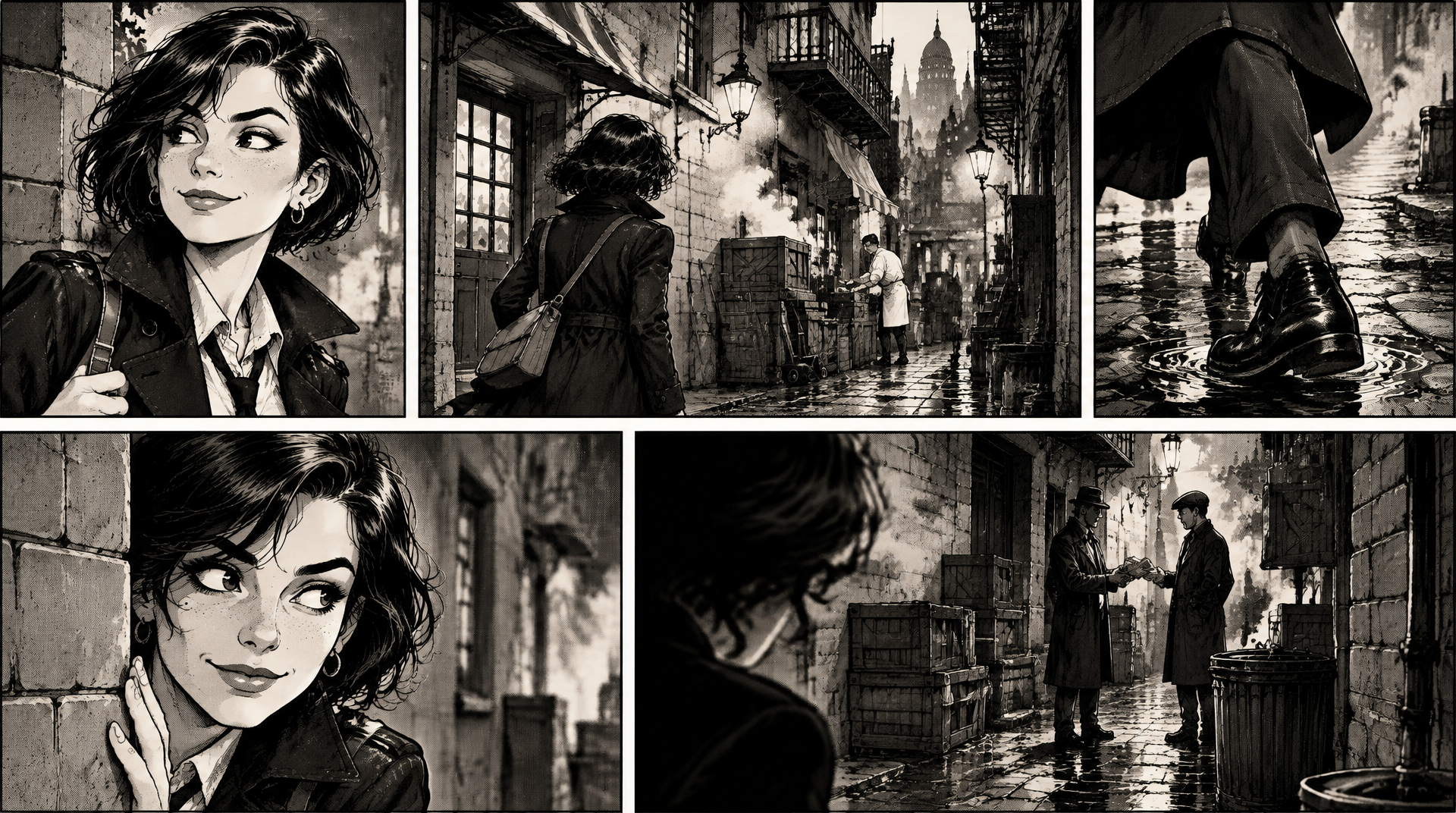
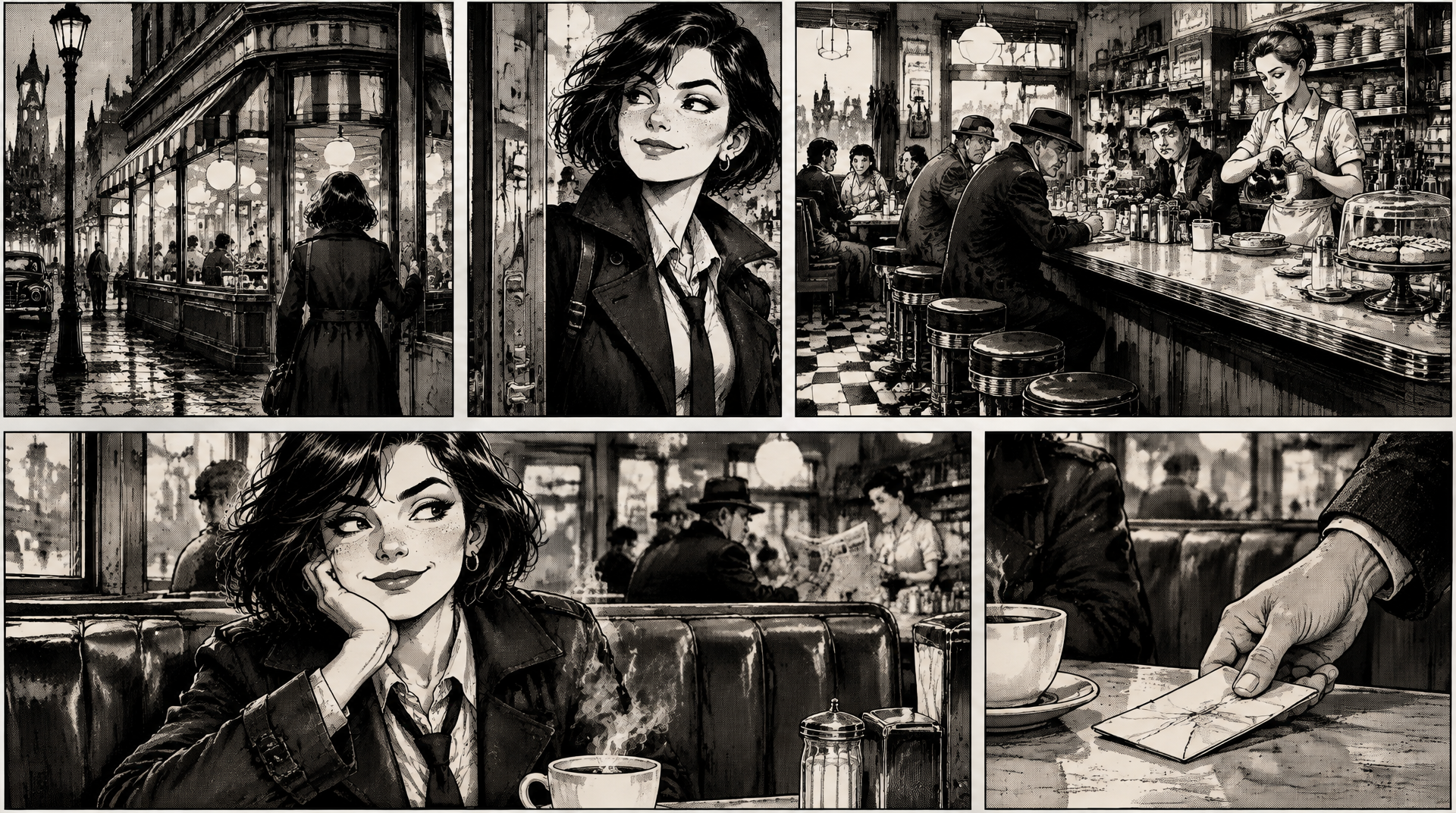
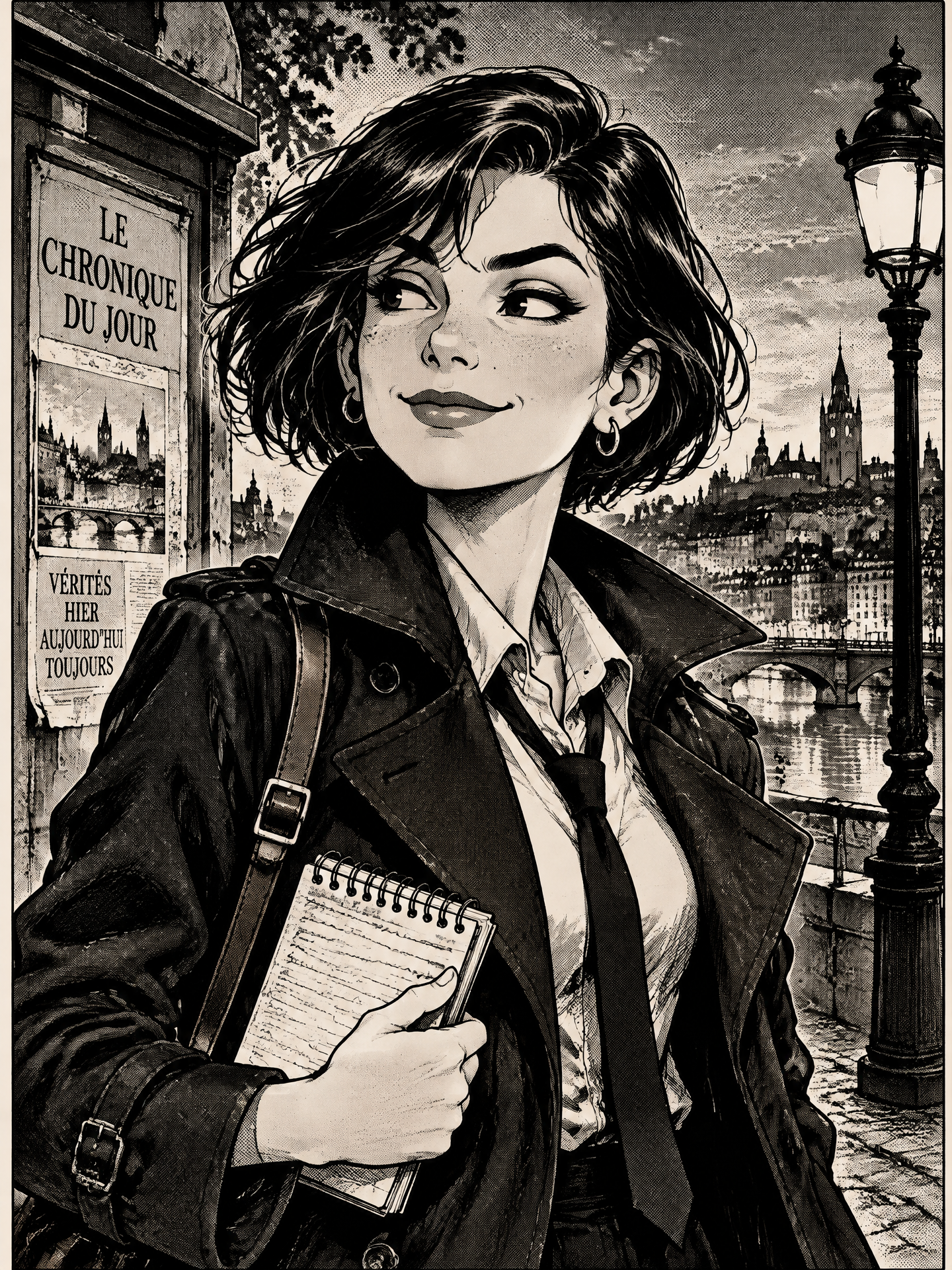
A timeless black-and-white metropolis of corner diners, newsroom steps, apartment stoops, elevated tracks, alley shortcuts, and shopfront windows. The city feels period-agnostic: old enough for newsprint romance, modern enough for restless ambition, always rendered in bold ink lines, halftone shadows, and clean sequential framing.
History▾
The city grew block by block through hustle, reinvention, and public spectacle. Its neighborhoods developed distinct personalities shaped by printers, shopkeepers, performers, delivery riders, landlords, amateur detectives, and civic dreamers. Over time, the city became a place where reputations travel faster than facts and where every rumor can become tomorrow’s headline.
Factions▾
No faction is purely grand or villainous; influence belongs to overlapping circles of local power. Editors and printers shape public narratives, merchants and landlords shape daily survival, neighborhood associations defend turf and tradition, performers and street operators control attention, and quiet back-room fixers profit from confusion.
Conflict▾
The central tension comes from the constant collision between appearance and reality. Rumors spread, schemes tangle, deadlines loom, favors are traded, and minor misunderstandings escalate into public spectacles. Personal stakes stay human-scale, but timing, coincidence, and citywide gossip can make any small problem feel enormous.
Rules▾
Scenes should play with strong visual clarity, readable action, and cause-and-effect progression across multiple comic panels. Humor comes from character behavior, framing, and timing rather than cruelty. Stakes can be sincere, but the world stays light PG-13 and fundamentally humane. Visual storytelling should favor expressive poses, silhouette readability, recurring props, and environments that support clean sequential beats.
Return visits▾
These residents stay. Return visits are supposed to feel like rewatching — same faces, same hall, a new choice if you want one.
Credits▾
Authored by Storyworlds Studio